
A deck in Vancouver or Portland spends eight months a year wet and shaded and then gets baked for three. The floor boards take it worst: standing water, moss in the gaps, UV on the surface. By the time most people think about staining, the deck is grey, slick in winter and rough in summer. All of that comes off. The order matters.
1. Clean
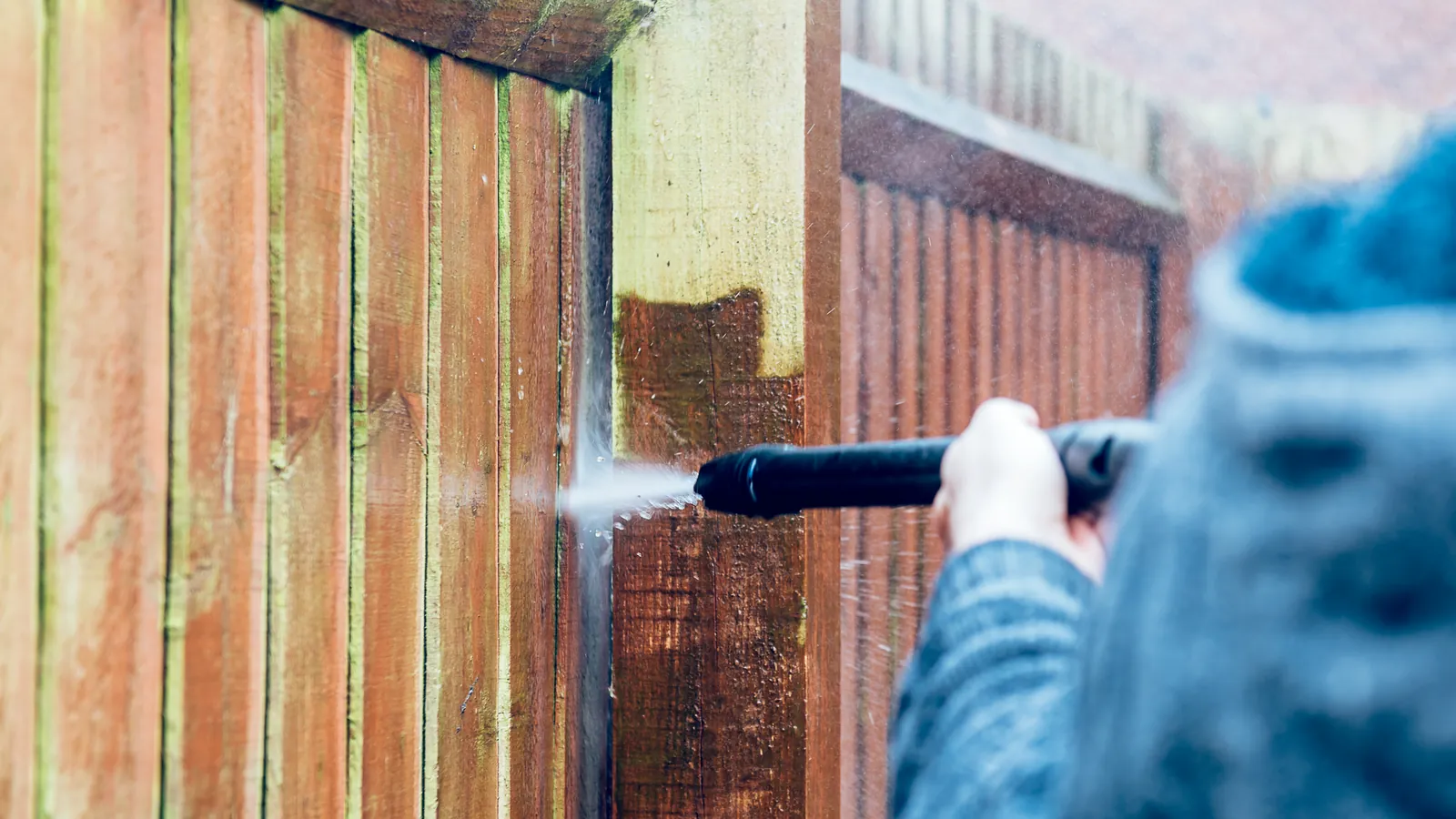
A deck cleaner, usually an oxygen-based one, is applied, left to work, scrubbed along the grain and rinsed. It lifts the dead grey fibres, the dirt and the mildew. A pressure washer can help with the rinse, but on a wide fan and at low pressure. Blasting a cedar deck at high pressure furs the surface, gouges the soft grain and drives water deep into the wood, which then takes weeks to dry.
2. Brighten
Cleaners leave the wood dark and raise its pH. A wood brightener, typically oxalic acid based, neutralises that, restores the natural colour, lifts tannin and rust stains around fasteners, and opens the grain so the stain can penetrate. Decks that skip this step take stain blotchy and dark. The difference on cedar is dramatic: grey goes in, honey comes out.
3. Dry. Really dry.
This is the step that cannot be rushed in this region, and it is the one most often skipped. After cleaning, the deck needs a run of dry days, often two or three in summer and longer in spring or fall, before it is ready. A moisture meter settles the question; the surface looking dry does not. Stain applied to damp wood does not penetrate, sits on the surface, and peels or goes milky. If a rain day lands in the middle, the clock restarts.
4. Sand and repair
Cleaning raises the grain, so the floor gets a light sanding to knock it back down and smooth the rough spots. This is also the moment to fix what the cleaning revealed: popped nails driven back or replaced with screws, split boards swapped, loose railings tightened. Any old finish that is still clinging in patches gets stripped back to sound wood, because new stain over flaking old stain fails with it.
5. Stain, in the window
Deck staining here runs roughly May through September, on dry wood, out of the direct midday sun. A penetrating stain is applied thin, worked along the length of each board and back-brushed so it soaks in rather than puddling. Thick coats do not add protection; they sit on top and peel. Railings and vertical boards go first so drips land on an unfinished floor, and the floor goes last.
What it looks like when a step is skipped
- Skipped cleaning: stain sits on dead fibres and wears off in a season, grey patches show through.
- Skipped brightening: dark, blotchy colour that looks dirty the day it is finished.
- Skipped drying: milky, peeling finish by the following spring.
- Skipped sanding: a rough, furry floor that holds dirt and water.
Keeping it
A deck floor in this climate typically wants a maintenance coat every two to three years, railings less often. Wash it each spring, treat the moss in the gaps, and recoat before the water stops beading. That maintenance coat is a wash and a day; a deck left to go fully grey is this whole process again. Deck staining and refinishing from Tall Pine Painting covers Vancouver, Clark County and the Portland metro. Call or text (360) 785-6225.
Cedar, fir and pressure-treated decks
Most Vancouver and Portland decks are one of three things. Cedar is soft, naturally rot-resistant and takes stain beautifully, but it furs under a pressure washer and greys fast in the open. Fir is harder, holds a smoother surface and is common on older decks and on railings, and it rots faster than cedar if the end grain is not sealed. Pressure-treated fir and hem-fir, green or brown when new, is what most newer decks are built from; it needs to weather and dry before its first coat, and it drinks stain unevenly if the brightening step is skipped. Each of them goes through the same clean, brighten, dry, sand and stain sequence. What changes is the drying time and how gently the cleaning is done.
Composite decks: do not stain them
If the boards are composite or PVC, with no wood grain through the edge, stop here. Composite is cleaned, not stained, and a film finish on it peels in a season. What composite decks in this climate do need is a proper wash for the moss and the black spotting that grows in the texture, and a check of the wood framing underneath, which is usually pressure-treated fir and does need sealing where it is exposed.
Staining a new deck for the first time
New wood is not ready the week it is built. Pressure-treated lumber arrives wet from the treatment and needs weeks, sometimes months, to dry before stain will penetrate. New cedar carries a mill glaze from the planer that keeps stain on the surface until it weathers or is lightly sanded off. The rule of thumb is to let a new deck sit through a dry stretch, test whether water soaks in or beads, and stain when it soaks. In this region that often means a deck built in spring gets stained in late summer, and one built in autumn waits until the following season. Leaving it bare through a winter is not a disaster, but it means the full cleaning and brightening process rather than a simple first coat.
Oil or water-based stain for the Northwest
Both work here when the prep is right. Penetrating oil stains soak in deepest, look richest on cedar and are forgiving to recoat, but they take longer to dry, which matters when the dry window is short, and some are limited by VOC rules. Water-based and hybrid stains dry faster, resist mildew better in the shade, and have improved to the point that they are the default on a lot of decks now. The honest answer is that the product matters less than the drying, the thin even coat and the maintenance cycle. A mid-range stain on a properly prepped deck outlasts the best stain on a damp one every time.
Deck staining questions
How long after rain can a deck be stained?
After a run of dry days, often two or three in summer and longer in spring or fall, and the test is a moisture meter rather than how the surface looks. If rain lands in the middle of the drying, the clock restarts. Stain applied to damp wood does not penetrate and peels or goes milky by the following spring.
Do I need to sand a deck before staining?
A light sanding after cleaning, yes. Cleaning and brightening raise the grain, and sanding knocks it back down so the floor is smooth and the stain goes on evenly. Any old finish still clinging in patches gets stripped back to sound wood at the same stage.
Is oil or water-based stain better for a deck in Vancouver, WA?
Either, when the prep is right. Oil stains penetrate deepest and look richest on cedar but dry slowly. Water-based and hybrid stains dry faster and resist mildew better in the shade, which suits a lot of decks here. The drying, the thin coat and the maintenance cycle matter more than the product.