
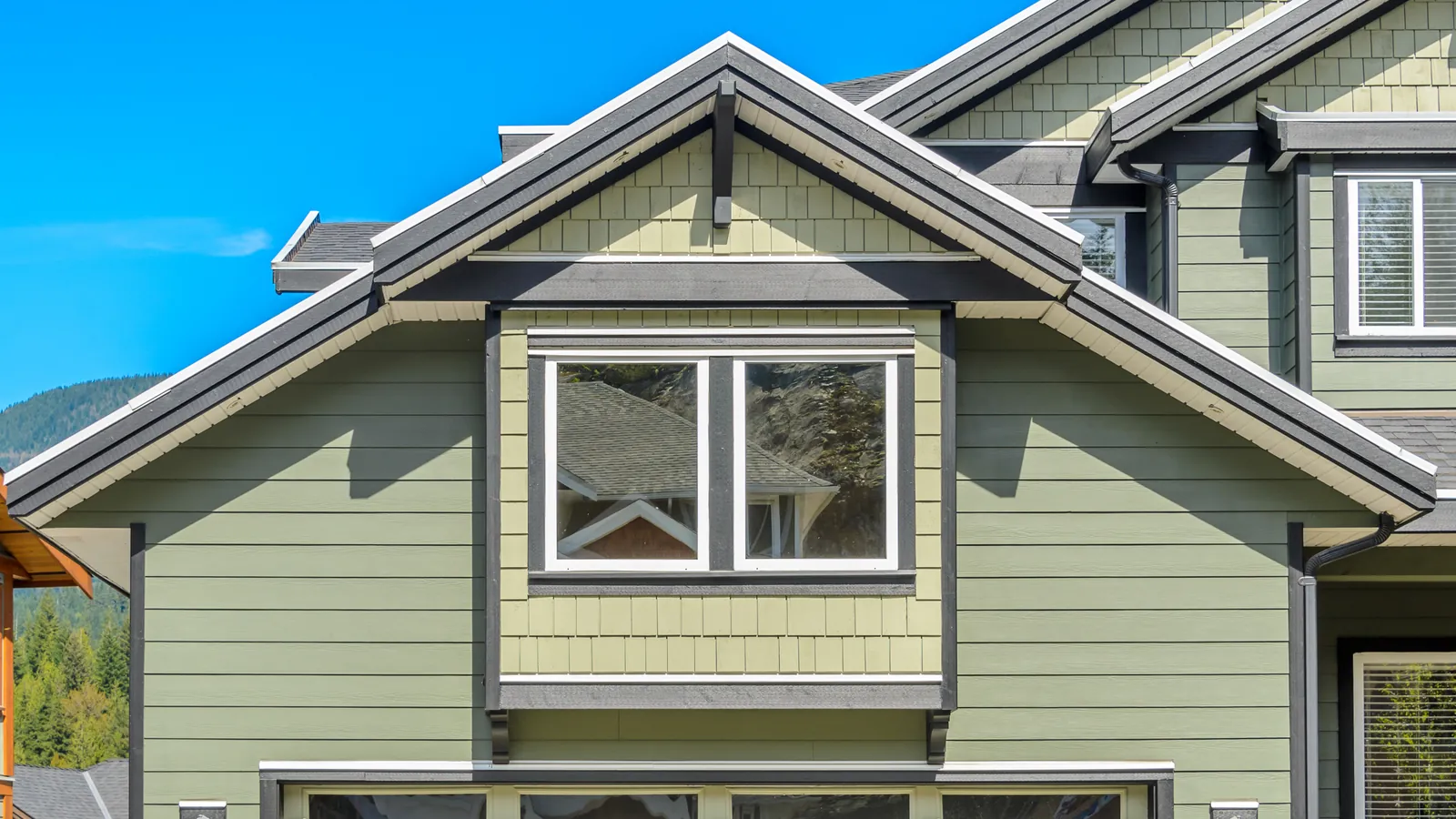
Homeowners want a number. The honest version is a range, and the range is wide: a well-prepped, well-painted exterior in Clark County can look good for a long time, and a rushed one can start peeling within a couple of winters. What decides which one you get is mostly settled before the first coat.
Prep decides the lifespan more than the paint
Two houses on the same street, painted the same month with the same product, can age completely differently. The one that was washed, scraped to a sound edge, caulked, primed on bare wood and painted onto dry siding keeps its finish. The one that got a quick rinse and a coat over whatever was there starts lifting wherever the old paint was already loose, because the new coat is only as attached as the layer under it. No brand of paint fixes that.
Each side of the house ages differently
- South and west. These take the summer sun. The paint chalks, fades and eventually cracks as the binder breaks down. They are usually the first to need repainting.
- North. This wall never dries out in winter. Mildew and moss grow on it, water sits at the bottom of each siding course, and paint fails from behind rather than from the surface. It often looks fine from the street while the sills and the lower boards are already going.
- East. Morning sun, afternoon shade. The easiest wall in the Northwest.
- Under the eaves versus exposed. Siding protected by deep eaves can go years longer than the exposed wall beneath a gutter that overflows.
Siding type matters
Fibre cement siding holds paint longest, because it does not move with moisture the way wood does; the weak points are the caulk joints, not the boards. Cedar and other wood lap siding does well when it is sealed and primed, and fails fast once water gets behind the film. T1-11 plywood siding, common on Vancouver homes from the 1970s and 1980s, soaks up water through the grooves and the bottom edge and needs attention more often. Stucco and masonry last a long time if they are sealed properly and do not have moisture coming through from inside.
The signs it is time
- Chalk on your hand when you rub the wall. The binder is breaking down.
- Hairline cracking, especially on the sunny sides.
- Peeling or bubbling at window sills, the bottom course of siding and trim ends.
- Caulk that has pulled away from the trim or cracked.
- Green film on the shaded walls that comes back a few weeks after it is washed off.
Catching it at the chalking stage is a repaint. Catching it after years of peeling is a repaint plus trim repair and sometimes siding replacement, which is the expensive version.
Maintenance that adds years
Wash the house once a year, ideally in late spring, to get the winter's dirt and mildew off before the sun bakes it in. Treat moss and mildew on the north side rather than just rinsing it. Clear the gutters so they do not overflow down the siding. Recaulk joints as soon as they open up. Touch up the sunny sides when they start to chalk. None of it is expensive, and all of it pushes the next full repaint further out.
See how Tall Pine Painting preps an exterior in Vancouver, or call (360) 785-6225 for an estimate. If your siding is cedar, staining may be the better choice than paint.
Repaint the whole house or just the side that failed?
Usually the whole house, but not always. If the south and west walls are chalking and cracking while the north and east are sound, a two-elevation repaint in the same colour is a reasonable call and it buys the other walls a few more years. The catch is matching: paint fades, so a fresh coat on one wall next to an older coat on the next is visible from the street until it weathers in. If the whole house is at the chalking stage, painting it once, properly, is cheaper than painting it twice in three summers. A good estimate will tell you which situation you are in rather than default to the bigger job.
Colour changes how fast a wall fails
Dark colours absorb more heat, move more with the temperature swings between a Vancouver summer afternoon and a Vancouver summer night, and fade faster in the sun. A charcoal or deep green south wall will chalk and lighten before a tan one next to it. That does not mean avoid dark colours, which look right on a lot of Northwest houses. It means use a quality product rated for dark exteriors, accept that the sunny sides will need attention sooner, and keep trim in a colour you can touch up without it showing.
What a workmanship guarantee covers, and what it does not
Our work carries a workmanship guarantee, and it is worth being clear about what that means on an exterior. It covers the work: paint that peels or lifts because of the prep or the application, a missed coat, an area that was not primed. It does not cover the weather doing what the weather does, chalking and fading on a sun-facing wall, damage from a leaking gutter or a sprinkler that hits the siding every morning, or rot that was in the wood before we arrived and was not part of the scope. The proposal spells out what is included, and the walkthrough at the end is when both sides agree it was done.
Painting over chalk, and other things not to do
Chalk is the old binder breaking down into a powder, and paint applied straight onto it sticks to the powder rather than the wall, then comes off with it. It has to be washed off, and a heavily chalked wall needs a bonding primer as well. The same rule applies to mildew, which has to be treated rather than painted over, and to glossy old trim, which has to be scuffed so the new coat has something to grip. None of this is complicated. It is just slow, and it is where a cheap bid saves its money.
Exterior paint questions
Can you paint over chalking paint?
Not directly. Chalk is the old binder breaking down into powder, and new paint applied over it sticks to the powder rather than the wall. The surface is washed until the chalk is gone, and a heavily chalked wall gets a bonding primer before the finish coats.
Does dark exterior paint fade faster in Washington?
Yes, on the sun-facing walls. Dark colours absorb more heat, move more with temperature swings and lose their colour sooner than light ones. They still work well here with a quality product rated for dark exteriors; just expect the south and west elevations to need attention sooner than the shaded ones.
Should I repaint the whole house or one side?
If only the sun-facing walls have failed and the rest is sound, repainting those elevations in the same colour is reasonable and buys the others time, though a fresh coat is visible next to a faded one until it weathers in. If the whole house is chalking, one proper repaint is cheaper than two partial ones.